When you buy chapatis from outside, you’re trusting someone with something very personal: the food your family eats every day. It’s a fair question to ask, “Who makes these, and how clean is the kitchen?” We think every customer deserves an honest answer. So in this article we’re opening our kitchen doors and walking you through the routine our team follows every single shift.
None of this is complicated. It’s a set of simple habits, written down and followed consistently. But in food, consistency is everything.
Why We Wrote It All Down
In the early days, like most small kitchens, we relied on experience and memory. The problem with memory is that it changes with mood, tiredness and new staff. One cook might wash the trays thoroughly, another might give them a quick wipe. One might weigh the dough, another might judge by eye.
So we created a written Standard Operating Procedure (SOP) for our kitchen team. Every cook learns it when they join, and it’s followed in every shift. The aim is simple: the chapati you get should be clean, safe and the same quality every day, no matter who made it.
Before Work Begins
Attendance first
Every team member marks attendance on arrival. This isn’t only about payroll. It means we always know who handled food in each shift, which matters if we ever need to trace a problem.
Hands washed before touching anything
No one touches flour, trays or machines until they have washed their hands properly. It’s the single most important hygiene habit in any kitchen, and we treat it as non-negotiable.
Equipment checked and cleaned
Before the first ball of dough is made, the team checks that machines, trays, weighing scales and work surfaces are clean. If there’s flour residue, dust or any dirt on a machine, it’s wiped down with a clean cloth first. The weighing scale is kept dry and clean, because spilt flour or water affects both hygiene and accuracy.
Making the Dough
Measured ingredients, every time
Our dough is made with flour, water, oil and salt in fixed proportions. Nothing is added “by guess”. Measuring keeps the taste and softness consistent and stops the dough from being too dry or too sticky.
Texture check
After kneading, the dough’s texture is checked before it’s divided. If it isn’t right, it’s corrected first. A poor dough can’t make a good chapati, no matter how skilled the person rolling it.
Weighed dough balls
Each dough ball is weighed, and our standard ball is 50 grams. Balls in the same tray must be uniform. This one habit is the reason our chapatis are the same size day after day, and it also helps our bulk customers plan their portions accurately.
Rolling and Cooking
For wheat chapatis, we use rolling and baking machines. Machines help us keep thickness and cooking consistent at larger quantities, and they reduce direct handling of the dough. But a machine is only as clean and reliable as the people looking after it. Our team keeps the machines clean during the shift, and they’re maintained and greased regularly so they run smoothly.
Tawa temperatures are watched closely. A tawa that’s too cool dries the chapati out; one that’s too hot burns it. Each chapati is cooked quickly so it puffs and stays soft.
Our bhakris are different. Bajri, jwari and nagli bhakri are still patted out and cooked by hand, the traditional way, by cooks who have years of practice.
Quality Checks During the Shift
Good routines include checking, not just doing. During each shift, chapatis are checked at random for size, softness and cooking. The number of dough balls in the trays is checked so nothing is wasted or left sitting too long. Any chapati that’s torn, burnt or undercooked is set aside. It doesn’t go to a customer.
Packing and Delivery
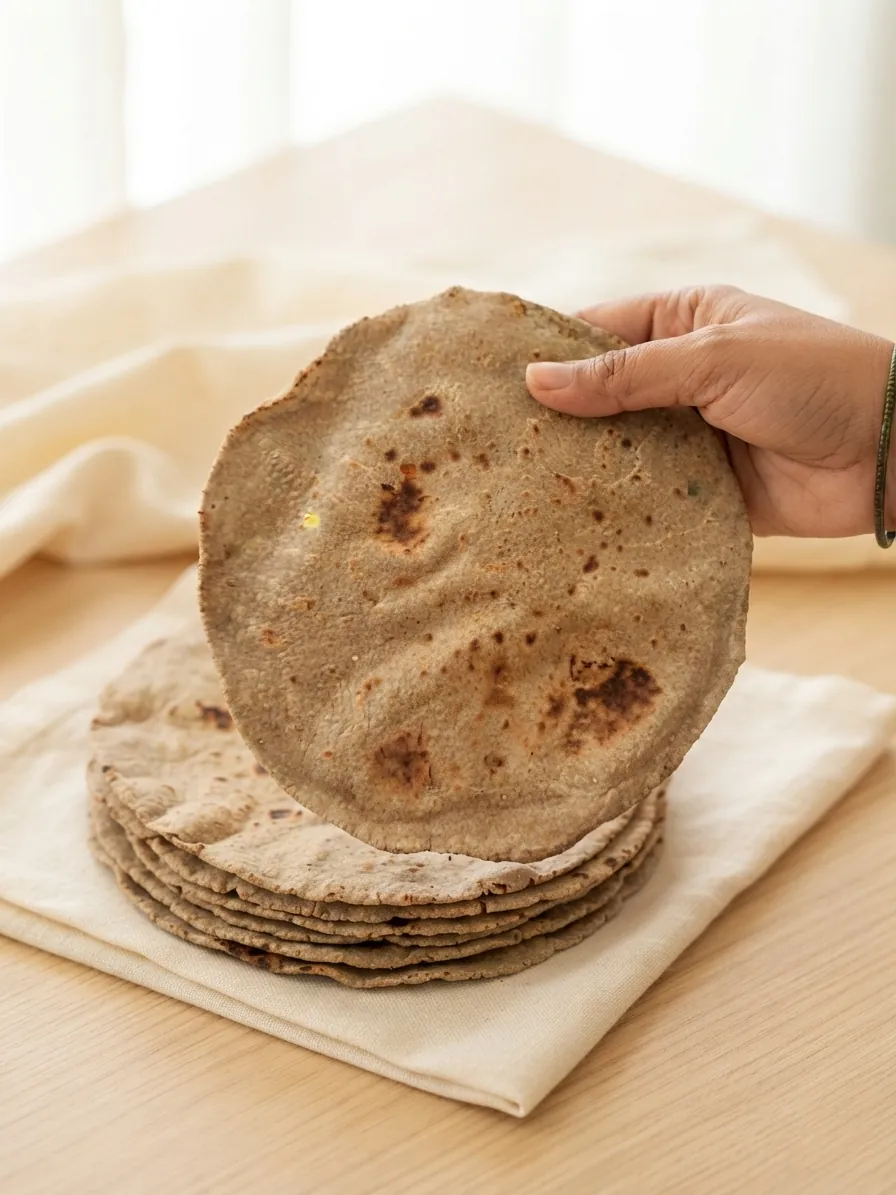
Once cooked, chapatis are stacked while warm and packed so that the steam stays in and keeps them soft. Packing materials are clean and food-safe. Orders are labelled and dispatched within the same batch. We cook in two batches every day, morning and evening, and chapatis go out the same day they’re made. We don’t store rotis overnight and send them out the next day.
Discipline Matters, Too
A kitchen isn’t only about recipes; it’s also about people working well together. Our SOP includes simple rules about discipline: staff don’t leave the kitchen during a shift without informing the manager, the kitchen is kept tidy throughout, and everyone is responsible for cleaning up their own station. These might sound like small things, but they add up to a kitchen you’d be comfortable eating from.
Registered and Accountable
Samarth Chapati House is an FSSAI-registered food business (Lic. No. 21524072002331). Registration isn’t just a certificate on the wall. It’s a commitment to follow food safety norms and to be accountable for what we serve.
An open invitation: if you’re a bulk customer, a mess owner or simply a curious regular, you’re welcome to visit our kitchen in Lekhanagar. Message us first so we can show you around without disturbing a busy shift.
Questions You Can Ask Any Food Supplier
Whether you order from us or someone else, these questions are worth asking: When were these made? How do you control size and quality? Is your kitchen registered? Can I visit? A good supplier will answer all of them without hesitation.
What We’re Still Improving
We won’t pretend we’re perfect. Like every growing business, we keep learning: training new team members, improving our machines, and finding better ways to pack and deliver. When a customer gives us feedback, good or bad, we take it seriously and use it to improve the routine.
Food You Can Trust
Behind every chapati we deliver is a simple chain of habits: clean hands, clean equipment, measured ingredients, weighed dough, careful cooking and fresh delivery. It’s not glamorous, but it’s what makes the difference between food you eat once and food you trust every day.
If you’d like to experience it for yourself, place an order on WhatsApp. We’d be glad to cook for your family.
Fresh rotis, delivered in Nashik
Chapati, bhakri, nagli roti and puran poli made fresh twice a day. Order on WhatsApp at 7498630507.