Say “puran poli” to any Maharashtrian and watch their face change. For most of us, it brings back a specific memory: the smell of ghee and cardamom drifting from aai’s kitchen on Holi morning, the stack of golden polis covered with a cloth, and the race to get the first one while it was still hot. Puran poli isn’t just a sweet. It’s the taste of a festival.
At Samarth Chapati House, puran poli is the one sweet on our menu, and it’s the item we put the most care into. Here is a closer look at this beloved dish: where it comes from, what makes a good one, and how to enjoy it.
What Is Puran Poli?
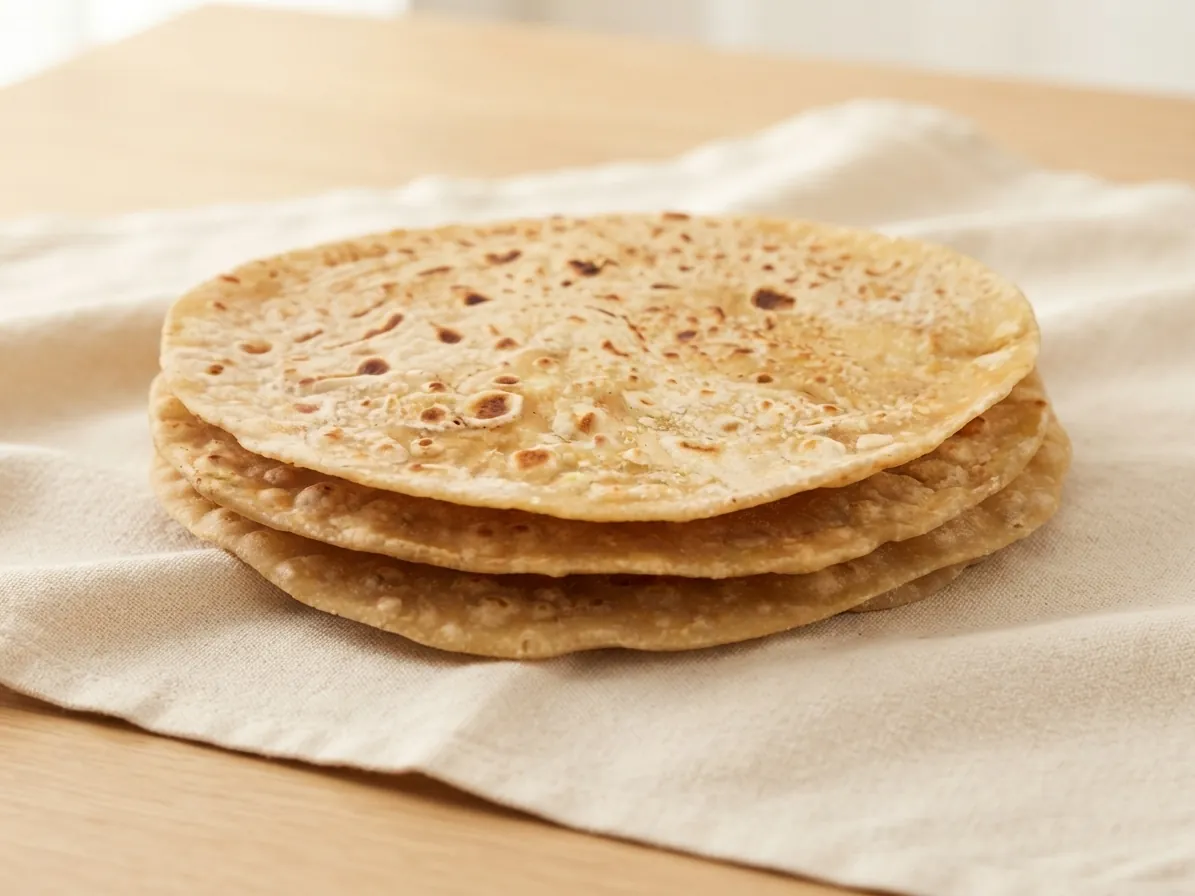
Puran poli is a soft, thin flatbread stuffed with a sweet filling. The outer layer, the poli, is made from wheat flour dough that is softer and more elastic than regular chapati dough. The filling, the puran, is made from cooked chana dal (split Bengal gram) mashed with jaggery or sugar and flavoured with cardamom and sometimes nutmeg.
The puran is wrapped inside the dough, then rolled out very thin without letting the filling break through. It is cooked on a tawa until golden spots appear and served with a generous spoon of ghee.
Puran Poli Across India
Although Maharashtra claims puran poli as its own, similar sweets exist across India. In Gujarat it is called vedmi, in Karnataka holige or obbattu, in Andhra Pradesh bobbatlu, and in parts of Tamil Nadu poli. Each region has its own variation. Some use coconut, some use toor dal, some are thicker, some are paper-thin. The Maharashtrian version is known for its chana dal and jaggery filling and its soft, thin poli.
When Is Puran Poli Made?
In Maharashtra, puran poli is closely linked with festivals and celebrations:
- Holi: the most famous puran poli day. A poli is traditionally offered to the Holi fire.
- Gudi Padwa: the Marathi New Year, often celebrated with puran poli and shrikhand.
- Ganesh Chaturthi: alongside modak, puran poli is a common naivedya.
- Pola: the festival honouring bullocks, when farming families make puran poli.
- Weddings, griha pravesh and family celebrations.
Many families also make it on Sundays or when a guest visits, simply because it’s everyone’s favourite.
Why Good Puran Poli Is So Hard to Make
Ask anyone who has tried to make puran poli for the first time, and they’ll tell you it’s one of the most difficult items in the Maharashtrian kitchen. Here’s why.
The puran must be just right
The chana dal is cooked until soft, drained, and then cooked again with jaggery until the mixture becomes thick and holds its shape. If the puran is too wet, it leaks through the dough and makes the poli soggy. If it’s too dry, it cracks and won’t spread evenly. Judging the moment it’s ready, when a spoon stands upright in the mixture, is a skill learned over years.
The dough must be soft and stretchy
Puran poli dough is much softer than chapati dough and is usually rested longer, often with extra oil, so it can stretch around the filling without tearing. Many cooks knead it until it is almost silky.
Rolling without breaking
This is the real test. A ball of puran is wrapped in dough, sealed, and rolled out evenly so the filling spreads right to the edges without bursting through. It requires gentle, even pressure and plenty of practice.
Our Approach to Puran Poli
We keep our puran poli close to the way it’s made in Maharashtrian homes. The base ingredients are simple and traditional:
- Chana dal, cooked soft and mashed smooth
- Jaggery and a little sugar for a balanced, not overly sweet taste
- Cardamom (velchi) for fragrance
- Wheat flour dough made soft and well-rested
- Ghee for cooking and serving
Getting the ratio of dal to jaggery right matters a great deal. Too little jaggery and the puran tastes flat; too much and it becomes sticky and overpowering. We worked on our proportions over many batches until the sweetness felt the way people remember from home.
How to Serve Puran Poli
The classic way: a hot puran poli with a generous spoon of ghee on top, and a bowl of katachi amti on the side.
- With ghee: non-negotiable for most Maharashtrians.
- With katachi amti: the thin, spicy-tangy dal made from the water used to cook the chana dal. The contrast of sweet and spicy is wonderful.
- With milk: some families pour warm milk or doodh-tup over a torn-up poli, especially for children and elders.
- With aamras: a summer treat when mangoes are in season.
Storing and Reheating Puran Poli
Puran poli keeps better than ordinary chapatis because of the jaggery filling. At room temperature it stays good for about a day in a closed container. In the fridge it keeps a few days longer. To reheat, warm it on a tawa on low heat with a little ghee until soft and fragrant. Avoid the microwave for long, as it can make the poli chewy.
Common Puran Poli Problems (and Their Causes)
- Filling bursts through while rolling: the puran is too wet, or the dough is too thin at one point. Cook the puran a little longer and seal the dough evenly.
- Poli is hard and chewy: the dough was too stiff or not rested long enough. Puran poli dough needs to be much softer than chapati dough.
- Filling tastes grainy: the dal wasn’t cooked soft enough or wasn’t mashed well. Traditionally the puran is passed through a puran yantra or sieve for a smooth texture.
- Poli burns before it cooks: the tawa is too hot. Puran poli needs gentler heat than a chapati because of the jaggery.
Ordering Puran Poli for Festivals and Events
Because puran poli takes time and skill, festival days are our busiest. If you’re planning a celebration, a puja or a family gathering, we recommend ordering a day or two in advance so we can make sure your polis are fresh and ready on time. For larger quantities for weddings or events, talk to us early and we’ll plan your order with you.
Whether it’s Holi, Gudi Padwa or just a Sunday craving, let us bring the taste of a festival to your table.
Fresh rotis, delivered in Nashik
Chapati, bhakri, nagli roti and puran poli made fresh twice a day. Order on WhatsApp at 7498630507.