Long before “superfood” became a marketing word, the hill villages around Nashik were already eating one. Drive through Igatpuri, Trimbakeshwar, Peth or Surgana during the monsoon and you will see small terraced fields of a short, dark-headed crop. That’s nagli, known across India as ragi or finger millet. For the Warli, Kokna and other communities of these hills, nagli bhakri has been everyday food for generations.
Today nagli is turning up in city supermarkets as ragi flour, ragi biscuits and ragi malt. But the simplest and most traditional way to eat it remains the same: a warm, earthy nagli roti or bhakri. In this article we’ll look at what nagli is, why it’s valued, and how to add it to your family’s meals.
What Is Nagli?
Nagli (Eleusine coracana) is a small, reddish-brown millet. The grains are tiny, about the size of mustard seeds, and grow in clusters that look like fingers, which is where the name finger millet comes from. It is a hardy crop that tolerates poor soil and uneven rain, which makes it well suited to the hilly, rain-fed farms of the western ghats.
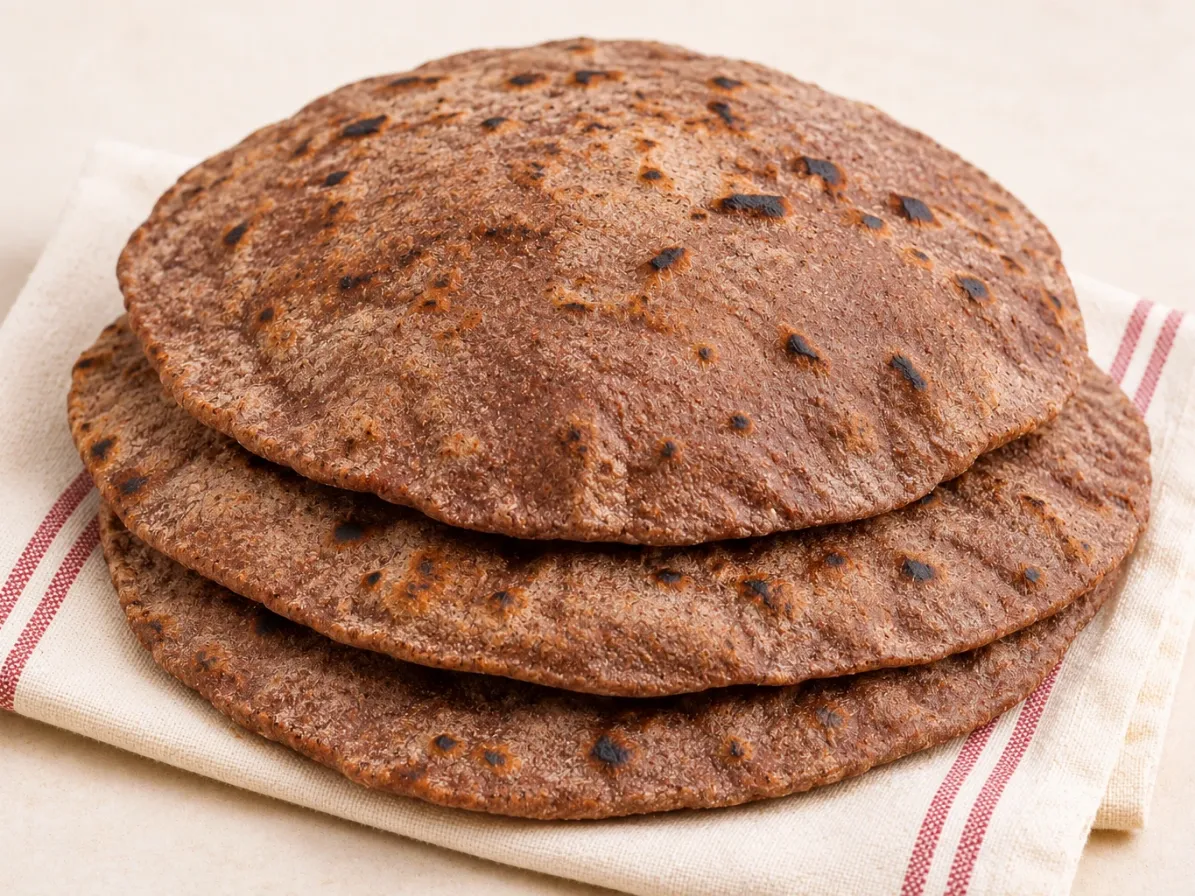
When ground, nagli makes a dark brown flour. It contains no gluten, so like bajri and jowar, it doesn’t roll out like wheat. Nagli dough is usually kneaded with hot water and either patted by hand into bhakri or mixed with a little wheat to make a softer roti.
Why Nagli Is So Highly Valued
Known for its calcium
Ragi is best known for being one of the richest plant sources of calcium among common cereals. That is why, in many parts of India, ragi porridge is one of the first solid foods given to babies, and why it is often recommended in the diets of growing children, pregnant women and elderly people. If your family doesn’t drink much milk, nagli is one way to add calcium from a whole grain.
A filling whole grain
Nagli is a whole grain rich in dietary fibre. Like other millets, it digests slowly and keeps you full for a long time. Farm workers in the hills traditionally ate nagli bhakri before a long day of physical work precisely because it “stays” with you.
Naturally gluten-free
For people who want to reduce wheat, nagli adds variety alongside jowar and bajri. As always, if you have celiac disease, check whether the roti was prepared in a kitchen that also handles wheat.
Iron and other minerals
Ragi also contributes iron and other minerals, and in traditional diets it is often eaten with jaggery and green leafy vegetables, which round out the meal nicely.
As with any food, these benefits come from eating it regularly as part of a balanced diet, not from treating it as medicine. If you have a specific health condition, speak to your doctor about how much millet suits you.
What Does Nagli Roti Taste Like?
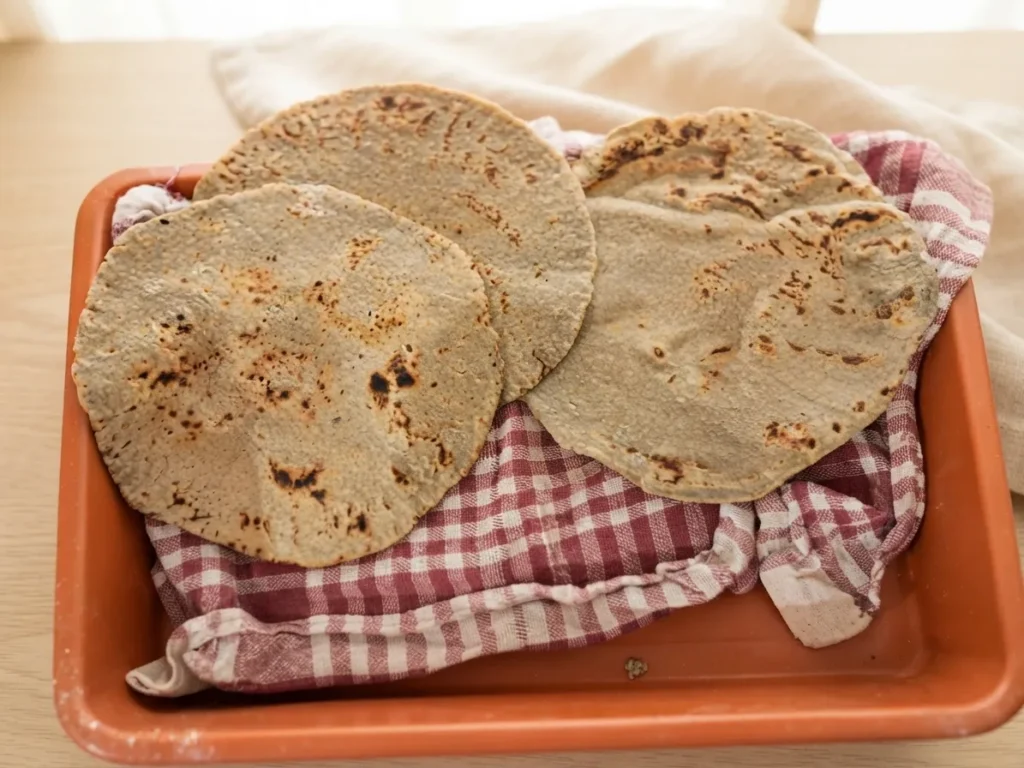
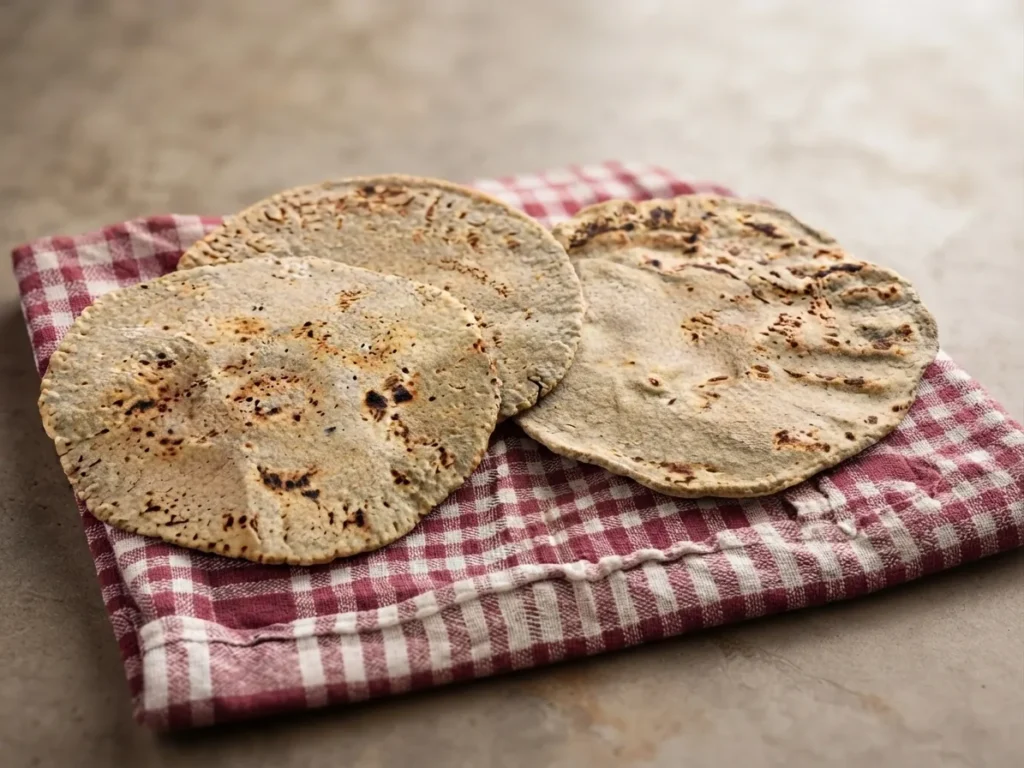
If you’re used to wheat chapatis, the first bite of nagli roti will feel different. It’s darker, denser and has a mild, nutty, slightly earthy taste. Freshly made, it is soft with a light crust. Many people find they love it with strong-flavoured accompaniments that balance its earthiness.
- Nagli roti with green garlic or peanut chutney
- With methi, shepu or chakvat bhaji in winter
- With a bowl of curd or taak on warmer days
- With jaggery and ghee, the way many hill families eat it
- With chicken or mutton rassa, a popular combination in rural Nashik
Why Nagli Is Tricky to Cook at Home
Nagli dough is even less forgiving than bajri. Because it has no gluten and absorbs water quickly, it cracks easily if the water isn’t hot enough or if the dough sits too long. Many home cooks use a technique called ukad, where the flour is cooked briefly in boiling water before kneading. This partly gelatinises the starch and makes the dough hold together.
The bhakri must then be patted to an even thickness and cooked on a properly hot tawa. Too thin and it breaks; too thick and the centre stays raw. It’s a skill that improves with practice, which is why the best nagli bhakris still come from experienced hands.
Simple Ways to Add More Nagli to Your Diet
Start small: replace one meal of chapatis per week with nagli roti and build up from there. Your family’s taste buds will adjust within a couple of weeks.
- Nagli roti for dinner: a warm nagli roti with dal and sabzi makes a filling evening meal.
- Ragi porridge for breakfast: cook nagli flour with water or milk and a little jaggery.
- Nagli in mixed-flour chapatis: add a spoonful or two of nagli flour to your wheat atta for extra fibre without changing the taste too much.
- Nagli ladoo: roasted nagli flour with jaggery and ghee makes a good winter sweet for children.
- Nagli dosa or cheela: mix with a little rice flour or semolina for a quick tiffin item.
Supporting Local Farmers
There’s another reason we like nagli. Much of the nagli grown in Maharashtra comes from small farms in the hilly blocks of Nashik and neighbouring districts. When we choose nagli, we’re supporting a crop that suits the local climate, needs relatively little water and has been grown sustainably by local communities for a very long time. It’s food with roots in our own region.
A Note for Parents
Many parents in Nashik grew up drinking nachni satva, a ragi porridge, as children. It is still a lovely way to introduce this grain to young kids. For school-going children, a small nagli roti rolled up with jaggery and ghee makes a tiffin item that feels like a treat. Always check with your paediatrician before introducing new foods to infants.
Nagli Roti From Our Kitchen
At Samarth Chapati House, nagli roti is one of our five core items, alongside wheat chapati, bajri bhakri, jwari bhakri and puran poli. We make it fresh and deliver it warm, so you can enjoy this traditional grain without learning a new cooking technique.
If you’ve been curious about ragi but never found the time to cook it, order a few nagli rotis with your next chapati order. It’s an easy way to find out whether your family enjoys it.
Fresh rotis, delivered in Nashik
Chapati, bhakri, nagli roti and puran poli made fresh twice a day. Order on WhatsApp at 7498630507.