It’s one of the most common questions we get from customers: “Should I switch from chapati to jwari bhakri?” Sometimes a doctor has suggested cutting down on wheat. Sometimes a family member has read about millets online. And sometimes people simply remember how good their grandmother’s jwari bhakri tasted and want that back.
The honest answer is that both are good foods, and the best choice depends on your body, your routine and what you enjoy eating. Let’s compare them fairly, from the perspective of a kitchen that makes both every day.
Meet the Two Contenders
Wheat chapati
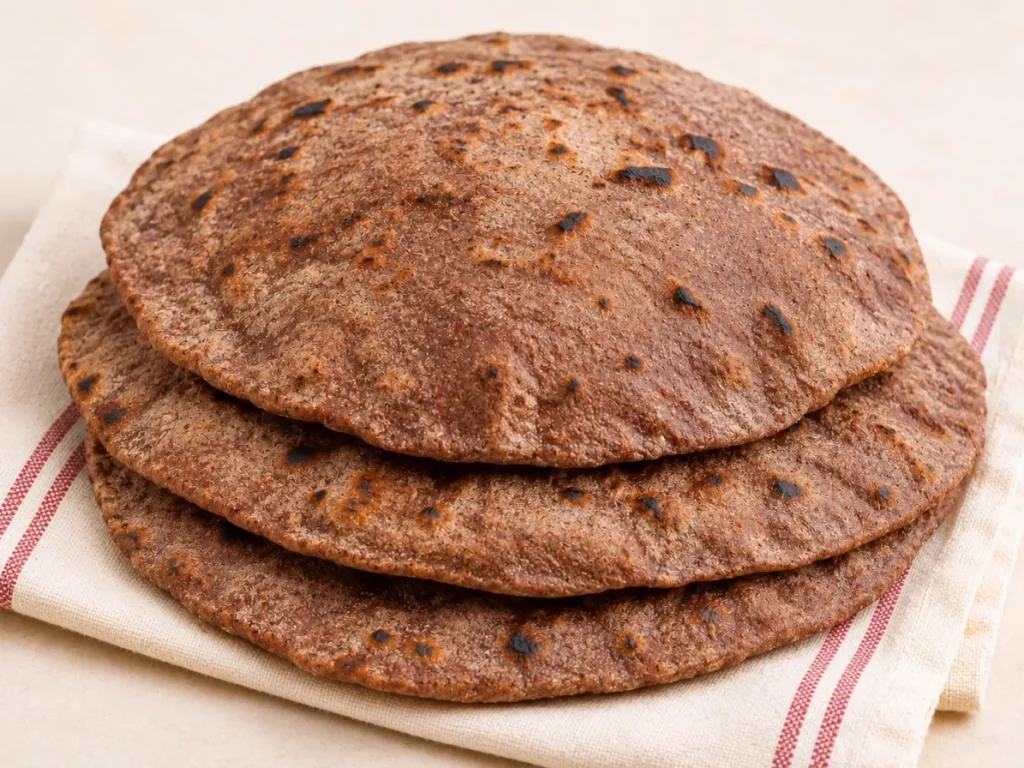
The chapati, or poli as we call it at home, is made from whole wheat atta, water, a little oil and salt. Wheat contains gluten, the stretchy protein network that lets you roll a chapati thin and makes it puff on the flame. It is soft, mild and goes with practically every sabzi, dal and usal in the Maharashtrian kitchen.
Jowar (jwari) bhakri
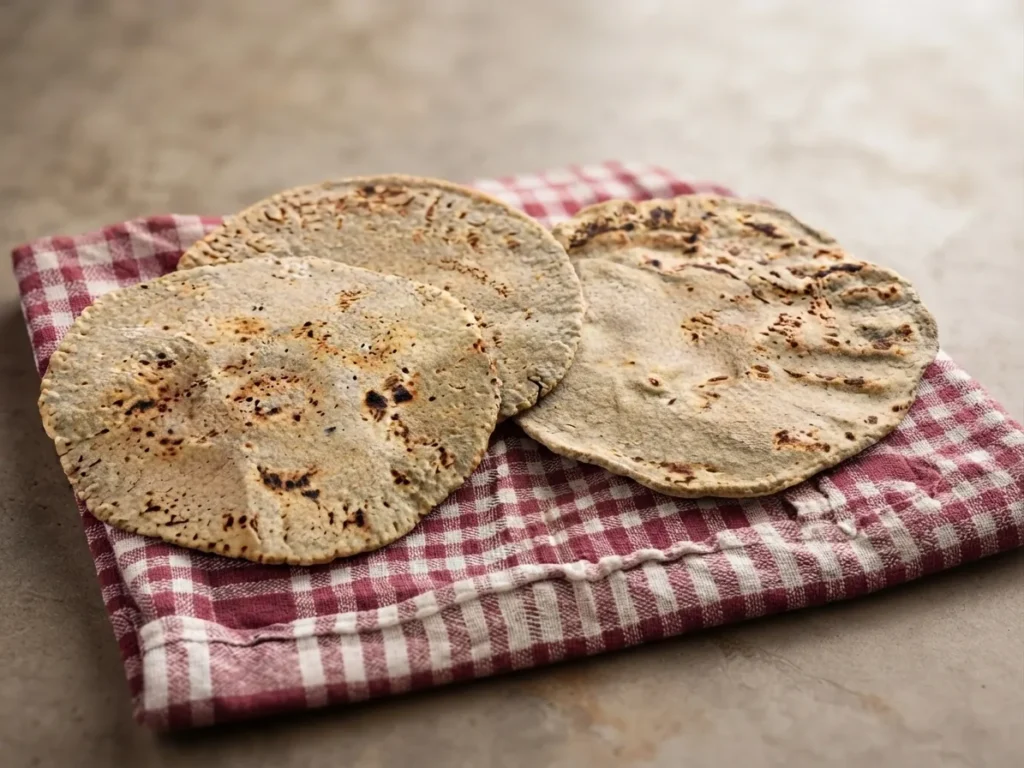
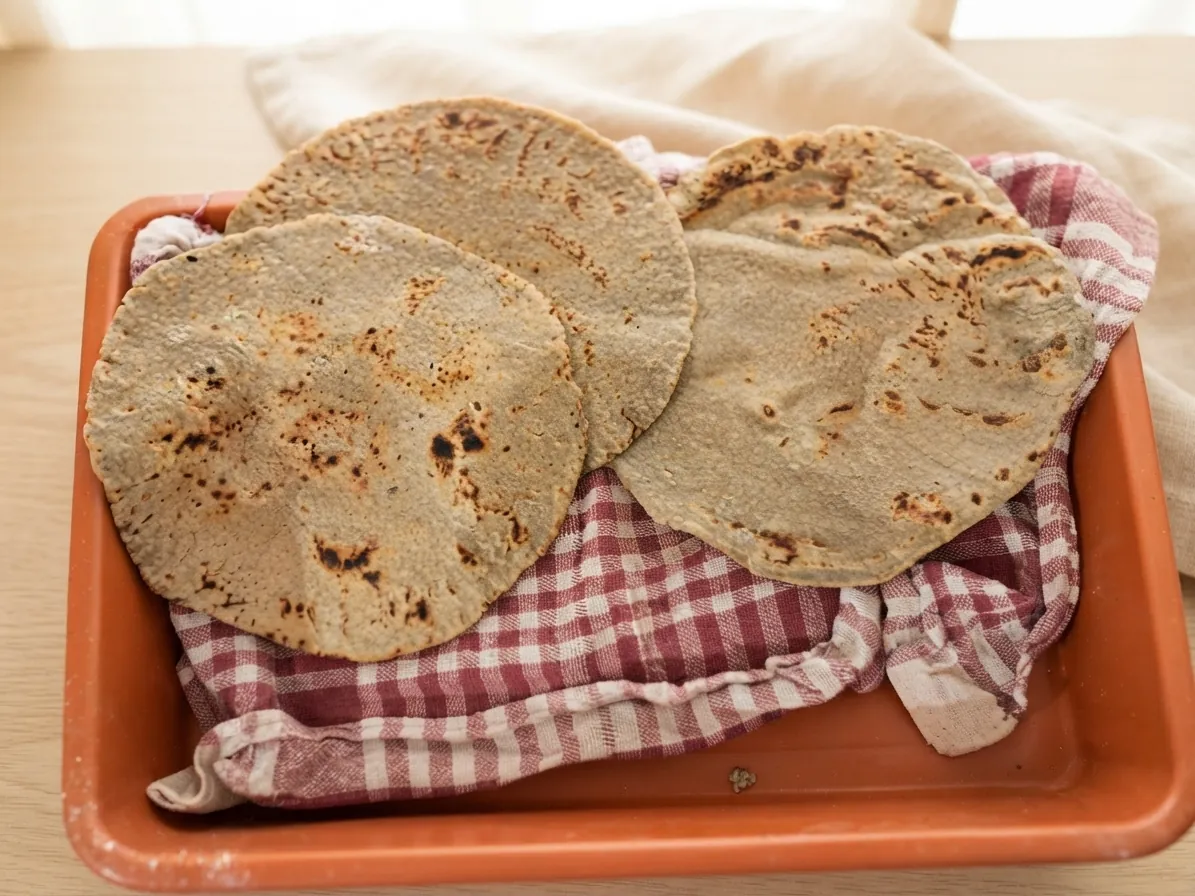
Jowar, or sorghum, is a millet that has been a staple in Maharashtra and Karnataka for centuries, especially in rain-fed regions like Marathwada and Solapur. Jwari flour has no gluten, so the dough is kneaded with hot water and patted out by hand. A good jwari bhakri is thicker than a chapati, slightly crisp outside and soft inside, with a gentle, almost sweet flavour.
Side-by-Side Comparison
| Point | Wheat Chapati | Jowar Bhakri |
|---|---|---|
| Gluten | Contains gluten | Naturally gluten-free |
| Texture | Thin, soft, flexible | Thicker, soft centre, light crust |
| Fullness | Moderate | Higher; most people eat fewer |
| Fibre | Good (whole wheat) | Good, whole grain |
| Ease of making | Easy to learn | Needs practice and skill |
| Stays soft after cooling | Better, if stored well | Turns firm faster |
| Best pairings | Any sabzi, dal, usal | Pithla, zunka, bharit, thecha |
Digestion: The Biggest Difference
Many people tell us that jwari bhakri feels “lighter” on the stomach, even though it is more filling. One reason is the absence of gluten. Most people digest gluten without any problem, but some feel bloated or heavy after eating a lot of wheat. For them, swapping a few chapatis a week for jwari bhakri can feel noticeably better.
That said, jowar is high in fibre, and if your family isn’t used to millets, suddenly eating it at every meal may cause the opposite problem. The sensible approach is to mix both: chapati for some meals, bhakri for others.
Nutrition in Plain Words
We are a kitchen, not a clinic, so we’ll keep this simple and avoid exaggerated claims you may have seen online.
- Both are whole grains when made from whole wheat atta and whole jowar flour. Both give you carbohydrates for energy, some protein and fibre.
- Jowar is often described as having a lower glycaemic impact than refined wheat products, meaning it may raise blood sugar more slowly. This is why it is popular with people managing their sugar levels. But portion size matters just as much as the grain. Three bhakris are not better than two chapatis.
- Jowar is gluten-free, making it a good option for people who have been advised to reduce gluten. People with celiac disease should still ask whether the bhakri was made in a kitchen that also handles wheat.
- Whole wheat atta is still a healthy grain. The bigger problem in many diets is maida, white bread and fried snacks, not the humble chapati.
If you have diabetes, thyroid trouble or digestive issues, please speak to your doctor or a dietitian about which grain and how much suits you.
Taste and Family Acceptance
Here’s something nutrition articles rarely mention: the healthiest roti in the world is useless if your family won’t eat it. Children who grew up on soft chapatis may find bhakri too dry at first. Elders may find it nostalgic and comforting. Office-goers often prefer chapatis in the dabba because they stay softer until lunch.
A practical approach many of our customers follow is chapati for packed lunches and jwari bhakri for a hot dinner at home, when it can be eaten straight off the tawa with a spoon of ghee.
When to Choose Chapati
- For tiffins and dabbas that will be eaten a few hours later.
- When serving children or guests who prefer soft rotis.
- With gravies like paneer, chole or dal makhani that need a flexible roti to scoop.
- When you need a large quantity quickly, for example at a function.
When to Choose Jowar Bhakri
- When you want a filling meal that keeps you going for hours.
- If you’re trying to reduce wheat or gluten in your diet.
- For traditional meals: pithla-bhakri, zunka-bhakri, bharit-bhakri.
- For a hot dinner eaten straight from the tawa.
Why Jowar Bhakri Costs a Little More
Customers sometimes ask why our jwari bhakri is priced higher than a chapati. The reason is time and skill. Chapati dough can be prepared in large batches and rolled efficiently. Jowar dough has to be kneaded with hot water in small portions because it dries out, and each bhakri is patted out by hand by an experienced cook. A skilled person can make far fewer bhakris in an hour than chapatis. We’d rather price it fairly than cut corners on how it is made.
How to Switch Without Upsetting the Family
If you want to bring more jowar into your meals, go slowly. Start with jwari bhakri at one dinner a week, served with a dish everyone already loves, such as pithla or a spicy bharit. Keep chapatis on the table too, so nobody feels forced. After two or three weeks, most families find they look forward to “bhakri night”. Children usually accept it faster when it comes with a little ghee and jaggery on the side. The aim is not to replace chapati completely, but to give your plate more variety.
The Verdict
There’s no need to pick a side. Wheat chapati and jowar bhakri are both part of a healthy Maharashtrian diet, and each has its place. Eating a mix of grains through the week, wheat, jowar, bajri and nagli, gives your body variety and keeps meals interesting.
If you’d like to try that balance without spending extra hours in the kitchen, we can deliver both. Order chapatis for weekday tiffins and jwari bhakri for dinner, all made fresh in our Lekhanagar kitchen.
Fresh rotis, delivered in Nashik
Chapati, bhakri, nagli roti and puran poli made fresh twice a day. Order on WhatsApp at 7498630507.